Fibromyalgia is a health problem characterized by widespread musculoskeletal pain, fatigue, and multiple tender points that occurs in precise, localized areas, particularly in the neck, spine, shoulders, and hips; also may cause sleep disturbances, morning stiffness, irritated bowel, anxiety, and other symptoms.
Fibromyalgia can involve other over lapping conditions: fatigue, yeast, gut health issues, body weight abnormalities.
The fundamental cause of fibromyalgia is an out of balance immune system, lack of energy and oxygen to the cells and a build of toxins in the body (and the subsequent pH imbalance). In mainstream medicine the only form of treatment are immune suppressive medications and often prozac type drugs for the depression and anxiety issues that are often a part of the symptomatic picture.
What causes the pain and other symptoms in fibromyalgia is unknown from a mainstream medical point of view.
There is no cure or standard treatment for the MNDs. Symptomatic and supportive treatment can help patients be more comfortable while maintaining their quality of life. The drug riluzole (Rilutek®), which as of this date is the only drug approved by the U.S. Food and Drug Administration to treat ALS, prolongs life by 2-3 months but does not relieve symptoms. Other medicines that may help reduce symptoms include muscle relaxants such as baclofen, tizanidine, and the benzodiazepines for spasticity; glycopyrrolate and atropine to reduce the flow of saliva; quinine or phenytoin for cramps; anticonvulsants and nonsteroidal anti-inflammatory drugs to relieve pain; tranquilizers to help with sleeping problems; antidepressants; and botulinum toxin, amitriptyline, and other anticholinergic drugs to control drooling. Some patients may require stronger medicines such as morphine to cope with musculoskeletal abnormalities or pain in later stages of the disorders, and opiates are used to provide comfort care in terminal stages of the disease.
One of the factors affecting in the slow progress of finding a
cure for Stargardt?s is the nature of the gene responsible for this
retinal disease. Some people with the gene never develop the disease,
while others seem to develop it without the gene. Environmental and
unknown factors play a role as well.

In the future, when a patient manifests a genetic defect, doctors
hope to be able to correct it and resolve the problems it causes. Gene
therapy involves inserting a functioning gene into human cells to
correct a genetic error or to introduce a new function to the cells.
The surgeon must transplant genes rather than cells, a strategy which
miniaturizes the process by a million fold. The surgical tools are not
hand-held instruments, but trained viruses. At the 1998 conference of
the Association for Research in Vision and Ophthalmology, a report
presented just such a technique for retinitis pigmentosa (RP), another
retinal degenerative disease. Researchers showed that a virus called
Lenti could carry a new gene into mouse photoreceptors and could
prevent the photoreceptors from degenerating for six months in a mouse
model of recessive RP. That's a long time for a mouse! In another
experiment, an adenovirus was used to deliver a gene designed to
prevent the expression of an abnormal dominant gene for RP. Thus, it
appears that both dominant and recessive forms of RP are amenable to
gene therapy -- at least in mice! Before we can begin human trials of
gene therapy for retinal degenerations, the long term effects of these
viruses, including rejection, must be better understood. Like
transplantation, this approach requires delicate subretinal surgery to
place the virus near the photoreceptors and the RPE.
Bee venom therapy is the part of apitherapy which utilizes bee venom in the treatment of health conditions.
Apitherapy is the use of beehive products, including honey, pollen, propolis, royal jelly, bee venom.
It has been used since ancient times to treat arthritis, rheumatism, back pain, skin diseases and in this modern age as an alternative therapy to treat multiple sclerosis, Lyme disease and chronic fatigue syndrome. Bee venom comes from the stingers of honey bees who use it in defense of the bee colony.
Bee venom is a rich source of enzymes, peptides and biogenic amines. There are at least 18 active components in the venom which have some pharmaceutical properties. The effect mechanism of the venom is not entirely know yet.
Scientists believe it can modify the way the immune system functions in the body and contribute to increased cortisol production.
Traditionally, bee venom was administered with live bees by stimulating them to sting in the affected area, trigger points or acupuncture points.
Depending on the nature of the disease, the standardized venom can be used in a cream, liniment, ointment or injection form.
Bee venom is most effective when it comes directly from the live bee during the late spring to early fall season when bees have a good pollen source to produce potent venom.
Their venom during the winter period is less potent. Next to the effect of a live bee, injectable venom solution is considered to be a standard method to administer bee venom.
Venom solution is prepared from pure bee venom (Apis Venenum Purum) and is a homeopathic preparation. It is administered intradermally just between the skin layers or subcutaneously under the skin to imitate the effect of a bee sting.
Each injection is equivalent to or is less than the average dry venom sac content of a honey bee. Bee venom is also used topically in creams, liniments and ointments.
The application of venom solution with electrophoresis or ultrasonophoresis is practiced in Europe and China.
Stretching also is a good relaxer for sore muscles. Carefully bend head to right and hold for ten seconds, then roll gently, head forward, then to left.
Then shrug shoulders, hold for a few seconds and then release. Repeat if needed. Go slowly and don't force head to shoulders, only go as comfortably as you feel.
A couple tips on how to prevent neck pain are simple basic ones but ones most people ignore. When using the phone, do not cradle the receiver between shoulder and ear.
Consider trying a hands-free headset if phone usage is large.
When sleeping do not sleep on stomach, instead lie on side with knees bent, this is also good for back problems.
On long car rides, place a pillow behind the neck for support. Also the simply purchase of buying a good sturdy pillow that shapes to posture is one of the best and most easiest prevention for neck pains.
Amphetamines have had a relatively short, though chequered history.
From their use in wartime, their abuse by the beat generation, up to the popularity of Ecstasy in the late 20th century, many have found amphetamines an enjoyable, though unpredictable, stimulant.
More than that though, amphetamine-based treatments have been found to have beneficial effects for those suffering from attention deficit disorders, and are now widely prescribed in the US and elsewhere as a treatment for children and adults.
What is the truth behind these medical claims? What are the real effects of stimulants like Ecstasy? Just how harmful are amphetamines?
In this book, a leading authority on psychoactive drugs explores the uses and abuses of amphetamines.
Starting with a look at the origins of amphetamines, their use in wartime, their use by poets, musicians - even a President of the US, it presents a fascinating and accessible account of amphetamine use.
It examines the evidence for the claims that drugs like Ecstasy kill, and considers the widespread use of amphetamines for ADHD, presenting a thorough account based on science and fact, rather than dogma.
More than 120 herbs and traditional medicines will eventually be evaluated by Campbell’s team and others at UCSF.
16 of the herbs tested so far have been deemed “highly active” against breast cancer cell growth.
Among these, rz rhei, a Chinese Rhubarb root, was especially promising in laboratory tests.
Other herbs that showed significant anti-cancer activity in laboratory tests included ban zhi lian, zhi mu, and wang bu liu xing.
These may be the focus of future clinical trials in human breast cancer and other patients.
Americans are turning more and more often to herbal remedies as a natural alternative to drugs.
But before you head off to the health food store for that bottle of St. John's wort or kava kava, you should know that natural does not necessarily mean safer.
In fact, evidence is mounting that some of the most popular herbs can have serious side effects.
EBIs the art and practice of realigning, balancing, and re-attuning the body.
Everything in creation is energy, and we, as energy, relate to it harmoniously or inharmoniously depending upon the degree to which we are in a balanced state of harmony within ourselves.
Chun Do Sun Bup is a 6,000-year-old healing Art whose principle is that energy shortage or disruption is the cause of all diseases and pain.
Bring about 1 cup of water to a boil. Add about a half-teaspoon cayenne pepper (or less if sensitive to spice) to the water. Continue to boil for several minutes, then remove from heat. Add about 2 tsp. honey and the juice of 1/2 a lemon (about 2 tsp.) Stir well, and drink when at a tolerable temperature. 4 cups a day is suggested.
Recipe 2: Apple Cider Vinegar Gargle
Mix water and apple cider vinegar at a ratio of 1 tsp. vinegar to 2 Tbs. water. Gargle every hour, swallowing afterward.
Recipe 3: Salt Water Gargle
Mix 1/2 to 1 tsp. salt in a glass of warm water. Gargle every couple hours, spitting out when finished.
Recipe 4: Make Your Own Tea or Gargle!
Honey, lemon, apple cider vinegar, and cayenne pepper are all very effective in soothing and curing sore throats. You can try your own proportions in a tea or gargle and see what works best for you! Below is a summary of the helpful characters of each of these ingredients.
Honey: Coats the throat, causing a soothing effect and nice taste in teas.
A type of treatment in which body tissue is exposed to high temperatures to damage and kill cancer cells, or in the case of conventional therapy, to make cancer cells more sensitive to the effects of radiation and certain anticancer drugs.
Local hyperthermia treatment (heat applied to a very small area, such as a tumor) is a well-established cancer treatment method with a simple basic principle: If a rise in temperature to 106÷F can be obtained for one hour within a cancer tumor, the cancer cells will be destroyed. The area may be heated externally with high-frequency waves aimed at a tumor from a device outside the body.
Ultrasound is more easily focused than other energy modalities, and can be applied to tumors located from the skin to 8 centimeters (approx. 3 in.) within the body.
This allows the treatment of tumors unreachable by other external modalities.
Whole-body heating is used to treat metastatic cancer that has spread throughout the body. It can be accomplished using warm-water blankets, hot wax, inductive coils (like those in electric blankets), or thermal chambers (similar to large incubators).
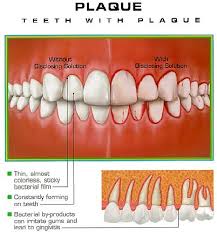
Plaque is made up of invisible masses of harmful germs that live in the mouth and stick to the teeth.
Some types of plaque cause tooth decay
Other types of plaque cause gum disease
bleeding gums can be the first signs of gum disease.
If gum disease is not treated, the tissues holding the teeth in place are destroyed and the teeth are eventually lost.
Dental plaque is difficult to see unless it’s stained.
You can stain plaque by chewing red “disclosing tablets,” found at grocery stores and drug stores, or by using a cotton swab to smear green food coloring on your teeth.
The red or green color left on the teeth will show you where there is still plaque—and where you have to brush again to remove it.